

CBS News appears to have been in free fall for some time now. Make that Network News Writ Large has been in free fall for some time now. And 60 Minutes — “The CBS News Weekly Magazine” — has tumbled. But there may be hope, now that Bari Weiss is in charge; the newly crowned Editor in Chief at CBS News joins on the heels of turning The Free Press from idea to 9-figure sale to Paramount.
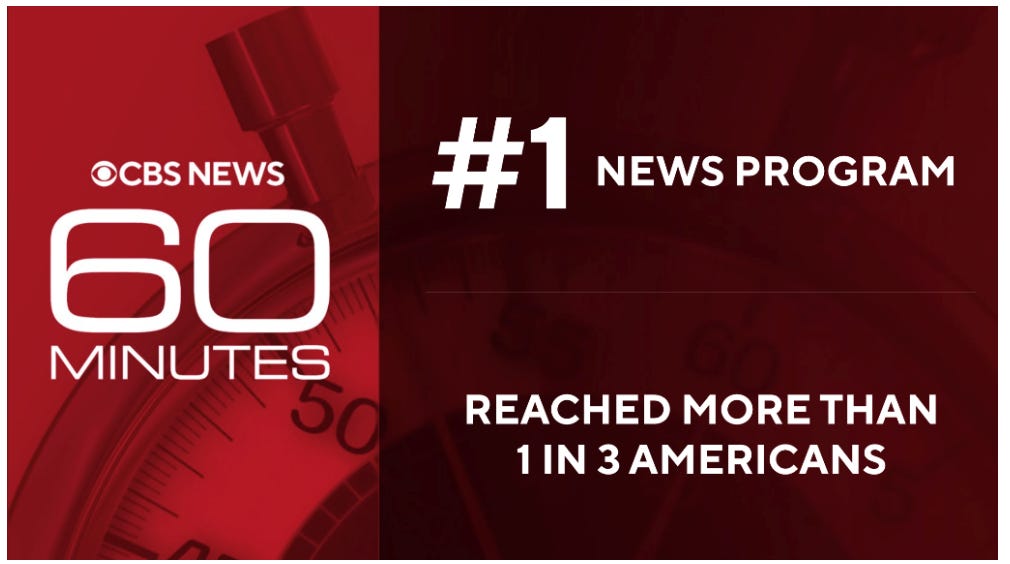
The above, blasted on the top of the Paramount Press Express page — YES, that’s the name for their Newsroom; this is where those who write about the business go to find news about the business, but, let’s face it, it’s clunky at best and also reminds me of a certain dance music outlet from the 80s, scroll all the way down for that — sounds impressive.
It's impressive only when compared to the rest of the programming on network television; it stands tall if you contrast it against other news programs on primetime. But it’s a shadow of its former self.
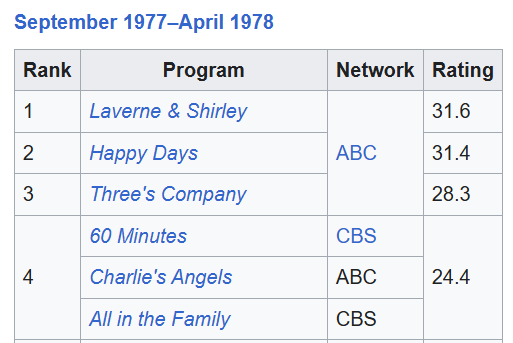
There are the ratings from the 1977-78 TV season.
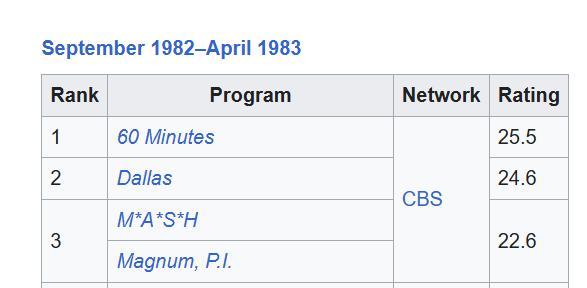
And there it is, the first time in the top slot, 1982-83.
60 Minutes would be Number 1 again for three straight years: 91-92 (21.9), 92-93 (21.9) and 93-94 (20.9). Everything started to change, it fell out of the Top 5, then out of the Top 10, then…well, let’s fast-forward to this past season, the one touted on the Paramount PR page.
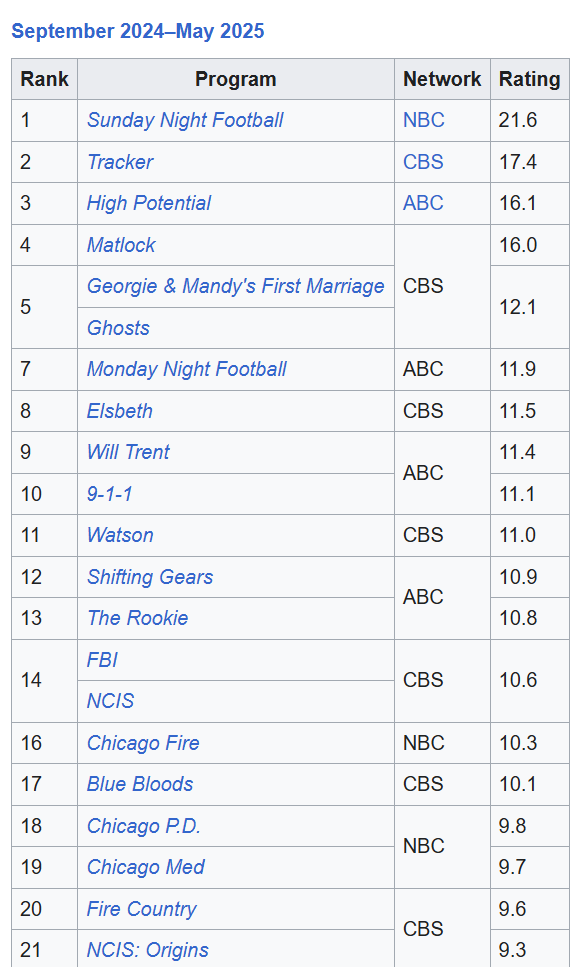
Here’s the rest of the list:
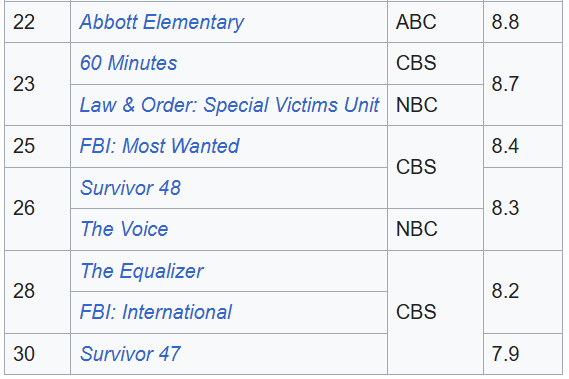
To their credit, the PR Team at Paramount does touch on the modern things that people go for (total video views, TikTok and Instagram success, etc.):

The numbers won’t be there on the networks for anything that doesn’t have the word “Football” in it. And that’s okay…when you’re ready to embrace that “long-form storytelling” that people want.
And that brings me to my Free* advice for Ms. Weiss (the asterisk: free is worth the paper it’s printed on; or, in this case, the Substack that, as we’re reminded in the below button, you can subscribe to…for no cost).
We Want It All
Two stories that underscore what I think will help 60 Minutes win back trust.
Story One: It was 1995, I was a junior PR guy, and the company I worked for had — mostly through my efforts, thanks — scored a golden opportunity. The company, Trans Union, was not yet a household name — because nobody cared about consumer credit reporting — but had built a really good fraud-fighting team in California. There, we were in the middle of a whole host of things, most of it unsavory, and very little of it for public consumption.
So, when 60 Minutes called me and said “we have someone who is being victimized by credit fraud, do you think you can help us with this story?,” I was more than happy to get to work.
A lot of back and forth later, our fraud-fighter and I were dispatched to Manhattan to be PART OF a 60 Minutes story. We weren’t going to be the whole story, and the rest of the story was going to be completely negative, but if we could weigh in, we would paint a pretty consumer-friendly picture.
The behind the scenes was…well, I knew how the sausage was made but wasn’t 100% sure how network sausage was made. I was able to watch the pros at work, and it was illuminating.
The story was great: everybody looked bad except for Trans Union’s Fraud Victim Assistance Department. Our phones rang off the hook the next day. People now knew that there were Nigerian fraud rings — THEY EXISTED BEFORE THE INTERNET!!! — and we could help fight those fraudsters. Our customers — banks, credit card companies — liked it, too, because it was one less headache for them.
The Point: Behind the Scenes, raw, open, less-scripted…is pretty cool. The original story was 12 minutes or so, but the ideas shared in our fraud-fighter’s hour or so in the hot seat…you could spend tons of time on those concepts. And that is what people are looking for: more access, more behind the scenes, more “give me instructions, tell me what to do now.” Is it realistic in every case? No. Could you take one 12-minute story and do ten different explainer videos that would live on YouTube for years? Absolutely. “How does credit work?” There’s ten minutes. “What is a credit score?” Ten more minutes. And so on. Take one piece of content, slice it, repackage it, add to it, tell a richer story. The key here: you have 60 minutes on the network show, and you have HOURS on YouTube.
On to…
Story Two: I still can’t believe they did it. In this case, “they” refers to Britain’s Channel 4, which dropped an unedited, 30-minute interview on YouTube in January of 2018. Interviewer? Cathy Newman. Interviewee? Jordan Peterson. (I’ve shared it maybe fifty times between all of my socials and on here.)
I’m not here to talk about the subject matter above but the reality: people will watch — 50 Million views for this one, and counting — long-form interviews if they are engaging.
The typical 60 Minutes treatment for a Dr. Peterson would look something like this:
A minute or so of setup
A couple sound bites from a Q&A between a Lesley Stahl type and Peterson
Maybe an establishing shot, a couple clips of him in action
A competing point of view, maybe someone who doesn’t like the guy
And so on. It’s so formulaic, just drop Stahl and Peterson into a longer version of this:
It’s not that we don’t care, but…well, maybe we don’t totally care for a personality setup piece. What we want is a discussion, some dialogue, an actual debate.
The Point: Perhaps 60 Minutes and the rest of CBS News is afraid of diluting its own product, but, if you’re touting Instagram engagement, you have already acknowledged that those rating numbers from 1977 or 1994 or even 2025 are not coming back.
They don’t have to.
It doesn’t have to be Jordan Peterson. You can think of maybe 100 characters you want to see interviewed, and each of those 100 characters has the potential for an expanded conversation that gets parsed into the 12 minutes for 60 Minutes and then given the Joe Rogan treatment on YouTube.
Do they all get 50 Million views? Nah. But some of them do.
And those pieces get carved up into YouTube shorts, and Instagram stories and TikTok videos.
It’s Fixable, Bari
I’m here to help. Also, about that Paramount Press Express web page?
May want to do a name change, because it reminds me of this band. (Enjoy this trip, Bari. I mean that sincerely.)
Great narrative, Dave!
I have a 60-Minutes story with Mike Wallace.
His producer, Josh Howard, wanted to do a story about whether medical technology was prolonging life or merely postponing death. I was at the University of Maryland Medical Center in Baltimore. I asked the leaders of several clinical areas, including the cancer center, the medical intensive care unit, the pediatric intensive care unit and our trauma center if they’d be willing to participate and also ask patient/families to be interviewed.
To my surprise, they all said yes because they wanted families to discuss these issues while everyone was still healthy.
We set the date. They came and it went pretty smoothly, although I had I worried beforehand - what if this is not really the story they’re coming to do?
But it was, and the 12 1/2 minute piece turned out great. It was one of those very high ratings periods.
The one glitch was that the story ran a whole year later than it was supposed to because the Gulf War had broken out and all of the pieces shot for that season were pushed aside. So I worried for a year that the piece may not see the light of day. What if Mike Wallace left the show in the interim?
In the end, it all worked out. Our doctors and nurses were portrayed as very compassionate as they were helping patients and families through the most difficult times possible.
And the doctor in charge of our pediatric intensive care unit who was 8 months pregnant when they shot the story, got tons of inquiries from friends and relatives across the country when the story finally aired. “Alice, they asked, are you expecting again?”
I was walking down a hallway with Mike Wallace and his crew, and a workman passed us and said, "Hi Mr. Rather!" Mike scowled and said, "Why do they always do that? I don't look anything like him!"